What overheating symptoms mean
Steam, coolant odor, a rising temperature gauge, warning messages, loss of cabin heat, puddles, or repeated fan operation can point to different faults. Continuing to drive can warp cylinder heads or damage gaskets.
Cooling-system faults can turn a manageable repair into major engine damage. Diagnosis comes before parts replacement.
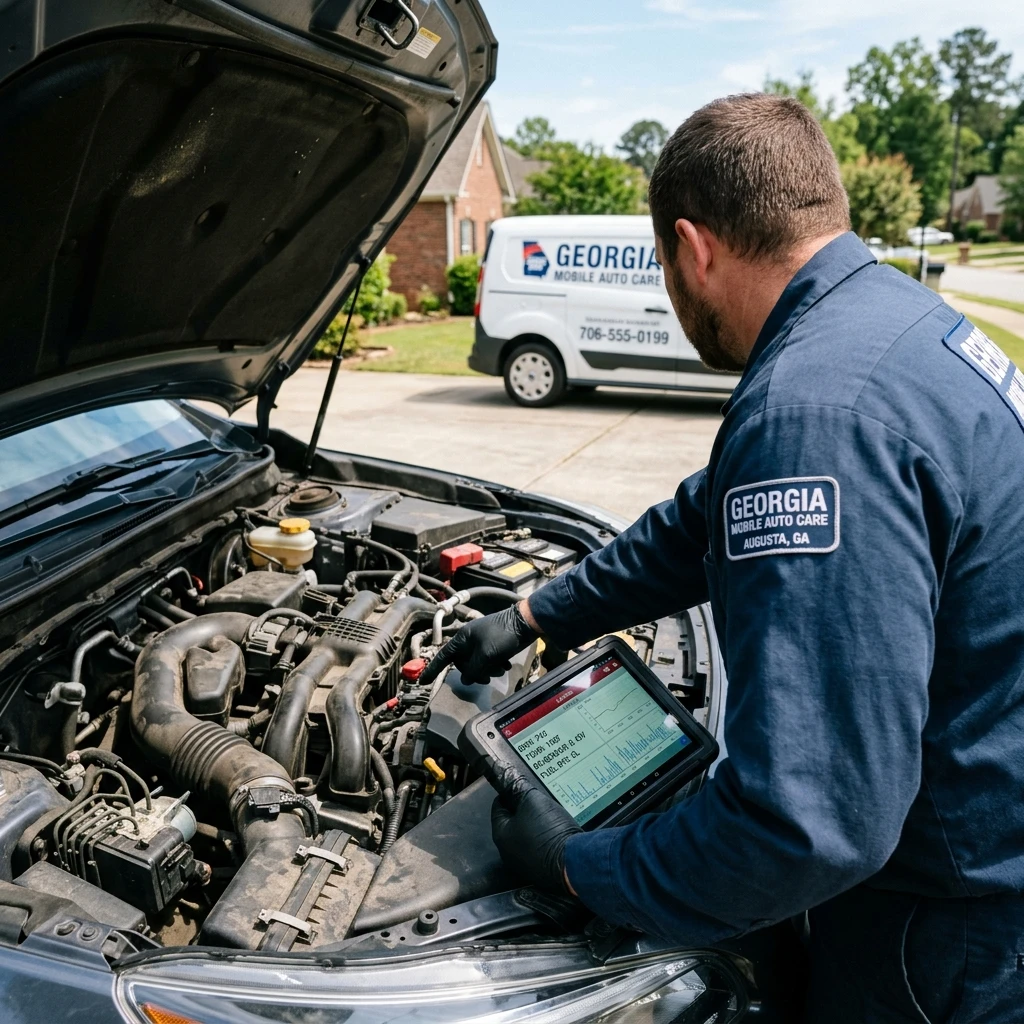
If a vehicle is overheating in Augusta, turn off the A/C, move to a safe location, and shut the engine down if the temperature continues rising or a warning appears. Do not open a hot radiator or pressurized reservoir. Mobile diagnosis may identify a failed hose, belt, thermostat, fan, sensor, leak, or charging issue.
Useful, vehicle-specific guidance for Augusta drivers.
Steam, coolant odor, a rising temperature gauge, warning messages, loss of cabin heat, puddles, or repeated fan operation can point to different faults. Continuing to drive can warp cylinder heads or damage gaskets.
Accessible upper or lower radiator hoses, serpentine belts, tensioners, some thermostats, cooling-fan relays, sensors, clamps, and minor external leaks may be practical at a safe location after the system cools.
Internal engine leaks, water pumps driven by a timing belt, radiator replacement with limited access, system contamination, repeated pressure loss, or a failed head-gasket test may require towing to a shop.
High ambient temperatures and low-speed traffic reduce cooling-system margin. A weak fan, low coolant level, restricted radiator, or slipping belt may first show symptoms during summer idling or stop-and-go travel.
Confirm vehicle-specific details before authorizing work.
Continuing to drive can cause severe engine damage. Move safely, shut the engine down if temperature remains high, and arrange diagnosis.
Do not open a hot pressurized cooling system. Wait for the engine to cool and follow the owner’s manual.
Often, if belt routing and access are suitable and the tensioner, pulleys, and driven accessories are checked first.
No. Coolant can escape from hoses, radiator, reservoir, water pump, heater core, cap, engine gaskets, or other connections.
It may temporarily restore level, but it does not diagnose the leak or cause. Use only the correct coolant type and never mix products blindly.
Our certified Augusta mobile mechanic service dispatches fully equipped service trucks directly to your home, office, or roadside location across Richmond and Columbia County.