Prepare the vehicle
Provide the VIN or complete vehicle details, mileage, keys, wheel-lock key, symptoms, warning-light photos, and any recent invoices or scan results.
The work area determines whether a mobile repair can be completed safely and efficiently.
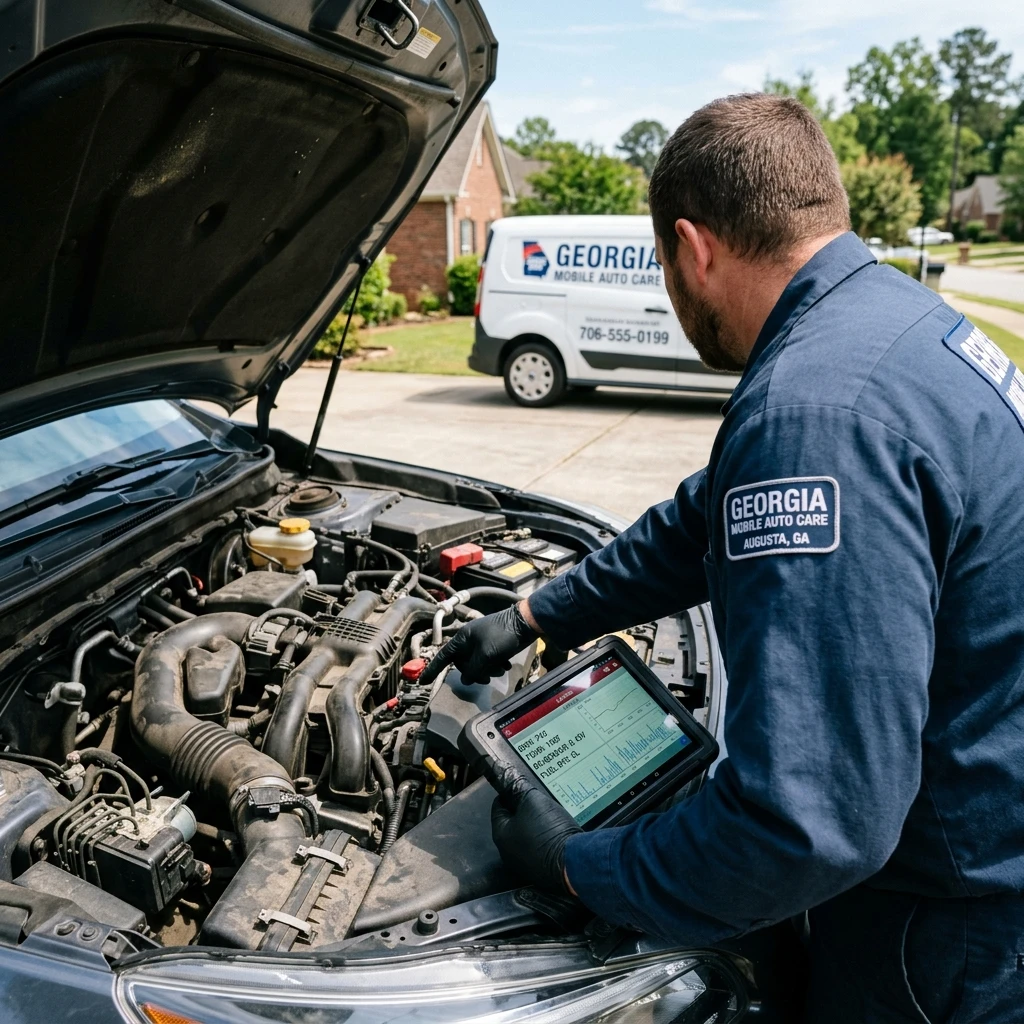
Before a mobile mechanic arrives, park on level pavement away from traffic, provide clearance around the vehicle, secure pets and children, confirm property permission, locate the keys and wheel-lock key, and share fluid leaks or safety concerns. Do not park on a slope, soft ground, or active roadway for under-vehicle work.
Useful, vehicle-specific guidance for Augusta drivers.
Provide the VIN or complete vehicle details, mileage, keys, wheel-lock key, symptoms, warning-light photos, and any recent invoices or scan results.
Choose level pavement with lighting and working clearance. Move other vehicles, disable sprinklers, and tell the technician about gates, parking restrictions, or low structures.
Rain, lightning, extreme heat, poor light, or wet pavement can make a repair unsafe. Keep scheduling flexible when conditions affect lifting, electrical, or A/C work.
The technician should stop if the surface shifts, traffic cannot be controlled, the repair scope changes, required equipment is unavailable, or the vehicle needs a shop-level procedure.